.svg)


.svg)


.svg)


%201Q26_%20GRC%202029.png?width=600&name=(CTA)%201Q26_%20GRC%202029.png)


.svg)

.svg)



Global Ready Conference
by

Reimagining
Localization
for the AI Era
All sessions now available on-demand
What we covered:

How to run better AI: see how high-performing global teams are making it work

How you can stay ahead: be first to know what’s new and where Smartling is going in 2026

Build vs. Buy: how to select the right localization framework for your org




Watch all sessions now
Reimagine your role: what it takes to lead — and win — in the AI era
The roles are changing. Some localization leaders already know it. Others are about to find out. Anna Schlegel — who has built localization into a strategic function at Fortune 500 companies and operated at the level of national government — says out loud what most localization leaders already sense but haven't yet fully reckoned with: the bar has been raised, the expectations have shifted, and the leaders who thrive in the AI era will be the ones who stop selling cost savings and start owning the room. The good news is that the skills, cultural insight, and cross-functional reach localization leaders have built over years are exactly what the AI era needs most. Leave with a clear picture of where the role is going, what's required to stay ahead of it, and something concrete to act on — because this moment belongs to the leaders who are ready for it.


Anna Schlegel
Chief Executive Officer, Universalization.ai
Bryan Murphy
CEO, Smartling
Smartling's roadmap & vision: Pioneering the future of enterprise AI translation
Every vendor claims they offer AI-powered translation. Few can show what that actually looks like in production at enterprise scale, with quality you can measure and trust. Smartling AI and product leaders Olga Beregovaya and Andrew Saxe walk through where the translation landscape is heading, what Smartling is building in response, and why quality is the hardest problem left to solve. The session focuses on what's shipping now and what's coming: from RAG and style rules for AI, to new connectors that bring translation into the tools you already use, to Smartling's answer to the growing gap between AI translation volume and quality oversight.

Andrew Saxe
Vice President of Product, Smartling
Olga Beregovaya
Vice President of AI, Smartling
Inside SumUp's AI localization implementation: Framework, workflows, and hard-won lessons
How do you decide which content to automate, which workflows to redesign with AI, and where AI still falls short? SumUp's localization team answers all three. In this session they walk through the content matrix they built to route translation decisions, the fully automated product workflow that transformed how engineering ships localized content, and the failures that sharpened their newly AI-driven system. Walk away with concrete decisions, real outcomes, and a framework for embedding AI into your localization workflows that actually holds up in practice.
What it actually takes to build executive buy-in for localization
Across every region and industry, localization managers are fighting the same battle: being brought in late, struggling to prove ROI to stakeholders who think in different metrics, and watching executives default to generic AI tools while dismissing the expertise localization teams have built over years. This panel brings together practitioners who have moved from reactive to proactive—building strong executive relationships, translating localization impact into numbers that actually land, and repositioning their teams from support function to strategic driver of global growth.
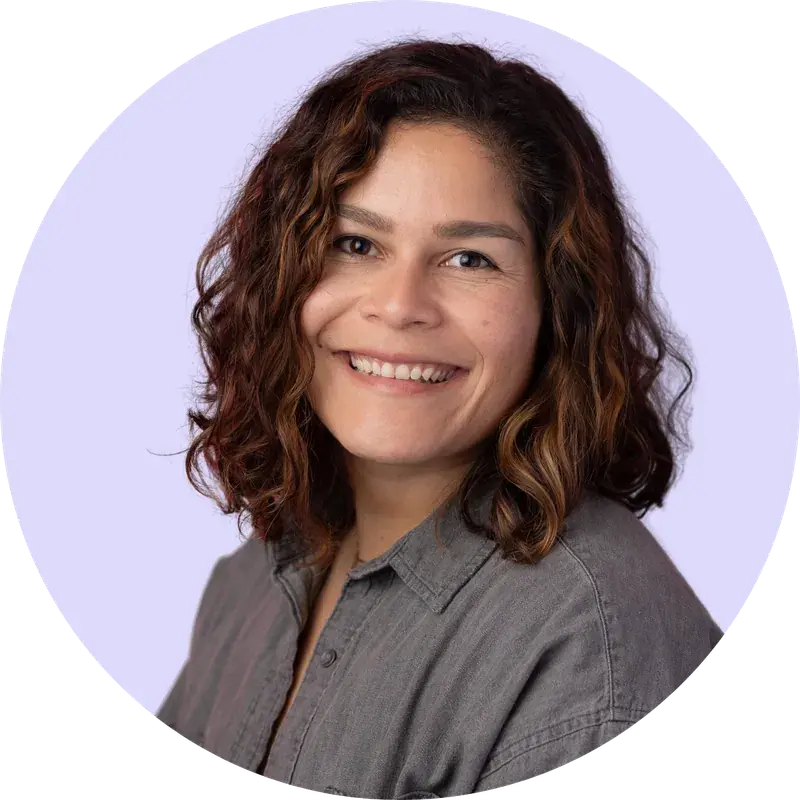
Kenny Mayo Imery
Senior Manager, Globalization & International Growth, Tinder

Jerome Selinger
Global Growth & Globalization Leader

Winnie Wong
Localization Lead, DoorDash

Ryan Soos
Director of Customer Success, Smartling
The localization leader's guide to governing AI translation
AI makes it possible to translate more, faster — but speed without structure creates its own problems: inconsistent terminology, quality drift, no audit trail, and real hallucination risk. This session is a practical guide to what AI governance actually means in a localization context: how to keep TM and glossary assets connected to the AI layer, what continuous quality checks catch before content ships, and how LQA Agent gives teams the ongoing monitoring signal they need to stay accountable for what AI produces.

Olga Beregovaya
Vice President of AI, Smartling
Alex Yanishesvky
Senior Director of AI and MT Solutions, Smartling
How to run a world-class marketing localization program: lessons from Docusign on AI, influence, and hyper-localization
Most marketing teams already have AI translation in their hands — and most of them think that's enough. It isn't. Dervilla O'Reilly, Lead Web Manager of Localization and International Operations at Docusign, shares how she educates marketing teams on why centralized, brand-trained workflows exist and what the real risks of ungoverned AI look like in practice. That's only part of the story. The harder work is upstream: adapting content before AI ever touches it, and making hyper-localization work across web, campaigns, and product content simultaneously across multiple markets. Add in the challenge of building program credibility and executive visibility with a lean team — through relationships, smart prioritization, and a business impact framework that makes every localization decision defensible — and you start to see what world-class marketing localization actually takes.
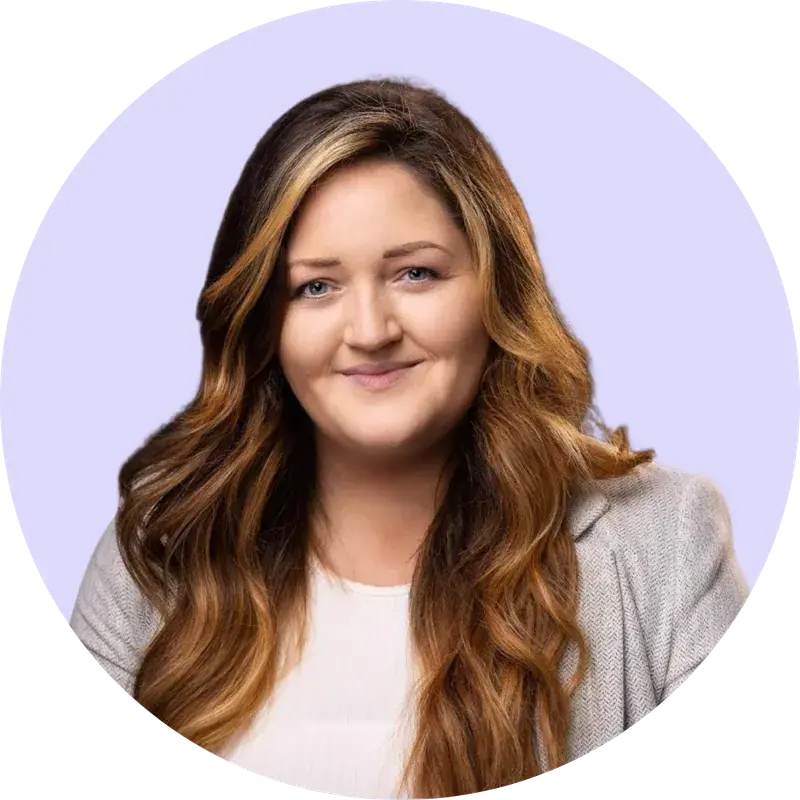

Dervilla O'Reilly
Lead Web Manager, Localization & International Operations, Docusign
Lina Tonk
Chief Marketing Officer, Smartling
When translation is a product decision: How IHG built a localization architecture for 21 languages and every channel
Most product teams treat localization as a downstream handoff—something that happens after the real product decisions are made. Michelle Kerr, Director of Product Transformation at IHG Hotels & Resorts, shares how her team rewired that assumption from the ground up: moving translation upstream into the CMS, building infrastructure that routes content to the right translation method at scale, and enabling content to originate in any language rather than defaulting to English-first. She also shares what happened when a consulting firm suggested they could just use a generic LLM solution, and what that moment revealed about the limits of generic AI for complex, high-volume content operations.

Michelle Kerr
Director, Product Transformation at IHG
Andrew Saxe
Vice President of Product, Smartling
From 200 to 2,000 hours of localized learning: IBM's playbook for scaling L&D translation
IBM's SkillsBuild program needed to reach learners in more countries — fast. But fully automated AI translation wasn't the answer: the content was technical, the learners were as young as 14, and quality couldn't be compromised. Bruno Goncalves, Global Program Strategist and Learning Experience Global Head at IBM, walks through how his team went from a manual copy-paste-into-Word-documents workflow to a scalable, human-in-the-loop system handling 2,000 hours of translated content across 13 languages — with a team half the size. He covers the SCORM/Rise/Storyline file handling approach, how they built translation memory from scratch for L&D content, and how they solved right-to-left language support for Arabic — a challenge the tools weren't built for out of the box.

Bruno Gonçalves
Learning Experience Global Head & Estrategista Global de Programa, IBM
The hidden work of localization: What the best teams fix before translation starts
The biggest drains on a localization program often have nothing to do with translation. Instead, they're upstream: jobs submitted with typos, missing context, or no documentation, content that pollutes translation memory, and rework loops that burn team bandwidth. Rossella Barry of AllTrails and Verónica Celdrán of Taskrabbit share how they've tackled these problems head-on, from building first-attempt authorization as a cross-functional KPI to enforcing submission standards across teams—and how they've made that work visible to leadership.

Rossella Barry
Localization Strategy Manager at AllTrails

Verónica Celdrán
Senior Manager, Globalization at Taskrabbit

Jim Richmond
Chief Customer Officer, Smartling
Why we stopped building and started buying: A localization leader's honest take on DIY translation infrastructure
The API call is the easiest 5% of building a translation system. The other 95% – the TM integration, glossary enforcement, compliance controls, connector maintenance, and the prompt retuning every time a new model ships – is on your team, permanently. Chris Dell has lived both sides of that decision at enterprise scale, and helped others make that decision. In this session, he shares the decision-making framework he uses to evaluate build vs. buy, how he has helped build internal alignment around the case for a dedicated localization platform, and what he has learned about the real cost and complexity of DIY translation infrastructure that only becomes visible once you're already deep inside it.

Chris Dell
Senior Advisor + Coach, Next Chapter Advisory + Coaching
Beyond the pilot: How high-performing teams are scaling AI in localization
AI is moving faster than most localization teams can evaluate it — and the gap between experimenting and actually scaling is where most programs get stuck. In this candid practitioner panel, localization leaders from Spotify, SAS, Rover.com, and SumUp share what's working at scale, where they've failed and what they learned from it, and how they're making technology decisions when the landscape changes week to week. Expect specific examples, honest failures, and a frank discussion about what it actually means for the localization team's role when AI starts owning more of the production.

Tommaso Rossi
Director of Localization, Spotify

Patricia Sainz
Translation Program Manager | Brand Marketing and Creative, SAS

Julio Leal
Head of Localization, Rover.com

Ana Vehar
Global Head of Content Localization, SumUp
Olga Beregovaya
Vice President of AI, Smartling